7 Tips for Choosing the Best Metal Exterior Doors
Choosing Metal Exterior Doors is not just a matter of picking a finish that looks good from the street. A door faces rain, sun, temperature changes, and daily use, while also shaping security, comfort, and curb appeal. The right choice depends on your home, local conditions, installation, and maintenance—not on a product label alone.
This guide examines seven practical considerations, including steel construction, insulation, weather seals, hardware, finish, sizing, and warranty terms. Look closely at the details: a solid-looking slab can still perform poorly if the frame is out of square or the bottom seal leaves a visible gap. Small things matter.
One important note: no source or expert name was supplied, so I can’t responsibly attribute a quotation to a named door-industry professional. Rather than invent a quote, this introduction focuses on verifiable selection factors. Treat manufacturer claims as starting points, then check documented specifications and ask a qualified installer how the door will perform in your conditions. Even careful research has limits; installation quality can change the result.
Understanding Metal Exterior Door Materials and Construction
7 Tips for Choosing the Best Metal Exterior Doors
Understanding Metal Exterior Door Materials and Construction
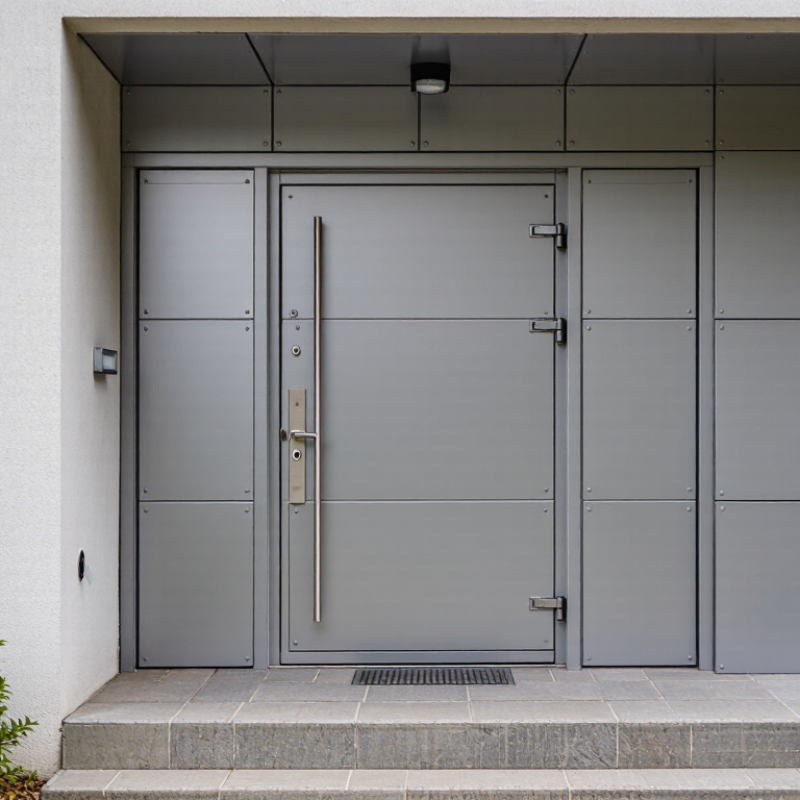
Choosing a metal exterior door starts with its material, not its color. Steel provides strong security and resists dents, but untreated edges can rust. Galvanized steel lasts longer in wet climates. Aluminum weighs less and naturally resists corrosion, making it useful near the coast. However, aluminum can dent more easily. Consider your weather, traffic, and maintenance habits before choosing.
Construction details often matter more than thickness. A solid steel skin should cover a stable, insulated core. Polyurethane cores usually improve thermal performance and reduce outside noise. Look for reinforced hinge areas and a strong frame connection. Continuous welds can provide better strength than scattered fasteners. Thermal breaks help limit cold transfer through aluminum frames. Check the threshold, too. A poor threshold can invite rain beneath the door.
During inspections, I examine corner joints, gasket compression, and the finish around cutouts. Small gaps can become obvious drafts during winter. Ask for documented air, water, and wind testing. Confirm the door matches the opening size, wall type, and local requirements. A durable coating needs proper surface preparation, not just a glossy appearance. I once trusted a beautiful finish that failed around the handle after one harsh season. That experience changed my checklist. No metal door is maintenance-free. Inspect seals, hinges, drainage paths, and exposed edges every year.
7 Tips for Choosing the Best Metal Exterior Doors
Understanding metal exterior door materials and construction starts with comparing their physical properties. Thermal conductivity indicates how quickly heat moves through a material; lower values generally support better insulation when the door includes an effective insulated core and thermal breaks.
Typical thermal conductivity of common exterior-door metals, measured in watts per meter-kelvin (W/m·K). Values are approximate engineering figures for the base metals and do not represent the complete thermal performance of an assembled door.
Evaluating Climate, Security, and Insulation Requirements
7 Tips for Choosing the Best Metal Exterior Doors
Evaluating Climate, Security, and Insulation Requirements
1. Study your local weather before selecting a door. Coastal air can corrode unprotected metal around edges, hinges, and thresholds.
2. Check wind-driven rain exposure. A deep sill, compression seals, and accurate flashing help prevent water entering during storms.
3. Consider temperature changes. In freezing regions, choose a thermally broken frame and insulated core to reduce cold transfer.
4. Examine security as a complete system. Strong steel matters, but hinges, strike plates, locks, and frame anchoring matter too. A reinforced jamb can resist forced movement better than a heavy slab alone.
5. Review the door’s glazing carefully. Laminated security glass may improve resistance while allowing daylight, although every glass panel creates another vulnerable area. More hardware is not always better.
6. Compare insulation information, including U-factor and air-leakage ratings. Lower heat transfer can make an entryway feel less drafty beside a cold hallway. Ask whether the threshold includes a durable thermal barrier. Small gaps are surprisingly noticeable.
7. Inspect installation requirements before ordering. An excellent door can perform poorly when the opening is uneven or the weather seal is compressed incorrectly.
On renovation projects, I measure the opening twice and photograph hidden framing before installation. That habit prevents expensive assumptions. I still find that appearance often receives more attention than drainage or air sealing. A perfect exterior door does not exist; the practical choice balances climate, security, insulation, maintenance, and the building’s actual conditions.
Comparing Door Styles, Finishes, and Hardware
7 Tips for Choosing the Best Metal Exterior Doors
Tip 1: Match the style to the home’s lines. A flush steel slab looks modern, while a paneled door feels more traditional.
Tip 2: Measure the opening, wall depth, and threshold carefully. A beautiful door still fails when the frame fits poorly.
Tip 3: Check thermal performance, especially with glass. The U.S. Department of Energy reports that windows can represent 25–30% of household heating and cooling energy use. Metal doors with large glazed areas need strong insulation and tight weather seals.
Tip 4: Compare finishes under real daylight. Powder-coated surfaces usually resist fading and scratches, but darker colors can absorb intense heat.
Tip 5: Inspect the edge, corners, and drainage path. These small details often reveal weak fabrication.
Tip 6: Choose hardware for daily use, not appearance alone. A solid lever, adjustable hinges, and a corrosion-resistant cylinder should feel smooth and firm.
Tip 7: Read the performance label. The National Fenestration Rating Council identifies U-factor and solar heat gain coefficient values, helping buyers compare insulated doors more objectively. Labels matter.
I have seen homeowners overvalue a dramatic finish and undervalue installation quality. That is an easy mistake. Even an efficient door may leak air if the sill, frame, or sealant is poorly installed. ENERGY STAR guidance also emphasizes qualified installation and weatherization. Recheck the swing, lock reach, and threshold height before ordering. Small corrections cost less than living with a daily annoyance.
Checking Measurements, Installation, and Maintenance Needs
7 Tips for Choosing the Best Metal Exterior Doors
Checking Measurements, Installation, and Maintenance Needs
Accurate measurements should guide every metal exterior door purchase. Measure the rough opening, not only the existing door slab. Record width, height, jamb depth, and threshold condition. Measure twice. Small errors can create drafts, binding, or uneven gaps. Check the wall for squareness with a level. Also examine the swing direction and nearby furniture. A beautiful door still fails if it blocks a walkway.
Installation quality affects security, energy efficiency, and service life. Confirm that the frame fits the rough opening without force. The installer should use corrosion-resistant fasteners and seal the perimeter carefully. Low-expansion foam can reduce air leakage around the frame. The sill needs proper drainage, especially in wet climates. Local building requirements may affect fire ratings, egress, or anchoring methods. Ask for written installation details and warranty conditions. I have seen rushed installations hide problems until the first heavy rain.
Maintenance needs vary with the finish and exposure. Wipe dust and salt deposits from the surface with mild soap and clean water. Avoid abrasive pads that can damage protective coatings. Inspect hinges, weatherstripping, screws, and drainage channels twice yearly. Touch up scratches promptly, but follow the coating manufacturer’s instructions. Metal can still corrode when moisture remains trapped near the threshold. That part is easy to overlook. In coastal areas, maintenance may need to happen more often. Keep a simple inspection record, even if it feels unnecessary.
Balancing Quality, Warranty, and Overall Cost
Metal exterior doors must balance durability with long-term value, not just a low purchase price. Tip 1: Check the metal gauge, core insulation, and corrosion protection. A heavier door is not automatically better. Look for solid construction, tight seals, and a thermal break that reduces indoor heat loss. Tip 2: Compare the complete installed cost. Include delivery, framing changes, hardware, finishing, and labor. A cheap quote can become expensive after installation problems appear.
Tip 3: Read the warranty carefully. Confirm coverage for rust, finish fading, warping, hinges, locks, and weather seals. Ask who handles claims and whether labor is included. Tip 4: Review installation requirements before ordering. Even a well-made door may leak if the opening is uneven or poorly flashed. Experienced installers should explain drainage, threshold height, and wall conditions in clear language.
Tip 5: Test the hardware before buying. The handle should feel firm, and the lock should operate smoothly without force. Tip 6: Consider maintenance over ten years. Powder-coated surfaces usually need less upkeep, but harsh weather still demands regular cleaning. Tip 7: Request written performance details, such as air leakage and insulation ratings. Sales language can sound impressive but remain vague. I once focused too heavily on appearance and overlooked the threshold design. That mistake reminded me that quality is practical, not decorative. Leave room for doubt, and inspect every assumption.
7 Tips for Choosing the Best Metal Exterior Doors - Balancing Quality, Warranty, and Overall Cost
| Tip | What to Compare | Practical Benchmark | Cost and Warranty Considerations |
|---|---|---|---|
| 1. Choose the right metal | Compare steel and aluminum doors for strength, weight, corrosion resistance, and intended use. | Steel is commonly selected for residential entry doors. Aluminum is lighter and naturally corrosion-resistant, and is often used in storefront or contemporary door systems. | Compare the complete door system—not just the panel—including frame, hardware, finish, and installation. Coastal or wet locations may require corrosion-resistant materials and coatings. |
| 2. Check the steel skin and construction | Ask for the steel skin gauge, core construction, frame details, and reinforcement around locks and hinges. | Steel gauge numbers work in reverse: a lower gauge indicates thicker steel. Gauge alone does not establish overall door strength; construction and reinforcement also matter. | Confirm that the quoted configuration includes the security hardware and reinforced areas you need. Review whether the warranty covers the slab, frame, and hardware separately. |
| 3. Compare insulation and energy performance | Review the door’s U-factor, weatherstripping, thermal breaks, and threshold design. | A lower U-factor indicates less heat transfer. Compare ratings for complete, similarly configured door systems, and check applicable local energy requirements. | Insulated cores and well-sealed frames can improve comfort and reduce drafts. Ask whether glass, sidelights, or decorative inserts change the published performance rating. |
| 4. Evaluate the finish and corrosion protection | Check primer or factory finish, edge coverage, maintenance instructions, and suitability for local weather exposure. | Look for a finish intended for exterior use, with documented care and repainting guidance. Inspect edges and cutouts, where exposed metal can be vulnerable. | Factory finishes may cost more upfront but can reduce initial finishing work. Read exclusions for scratches, improper installation, standing water, and failure to maintain the finish. |
| 5. Read the warranty in detail | Compare coverage duration and terms for the door panel, finish, glass, frame, and hardware. | Warranty periods and coverage vary widely by product and component; there is no single standard term. Check whether coverage is limited, prorated, or transferable. | Confirm who handles claims, whether labor or removal costs are included, and what actions could void coverage. Keep the receipt and installation records. |
| 6. Compare the full installed cost | Request itemized quotes covering the door, frame, hardware, removal, installation, finishing, and disposal. | As a broad U.S. planning estimate, a basic steel entry-door replacement may total roughly $500–$2,000 installed. Custom sizes, glazing, premium finishes, and structural work can raise the total substantially. | Prices vary by region, opening condition, configuration, and labor. Compare quotes with the same scope and ask which items are allowances or excluded. |
| 7. Verify fit, installation, and service | Check measurements, handing, swing, threshold, flashing, weather seals, and installer workmanship coverage. | A properly sized and installed door should operate smoothly, latch securely, and seal evenly around the perimeter without binding. | Include installation and any required repairs in the budget. Ask for the workmanship warranty in writing and clarify who is responsible for correcting fit or sealing issues. |
Planning note: Cost figures are approximate U.S. estimates, not a market quote. Actual prices and warranty terms depend on location, door size, configuration, materials, and installation conditions.
Related Posts
-
Ultimate Guide to Choosing the Best Metal Doors for Your Facility
-
How to Choose the Best Entry Doors for Your Home Redesign
-
Top 10 Steel Entry Door Manufacturers from China at the 137th Canton Fair
-
Top 10 Entry Door Replacement Tips for a Stunning Home Transformation
-
How to Choose the Best Entry Door Replacement for Your Home in 2025
-
Top 10 Benefits of Fiberglass Front Doors for Your Home